
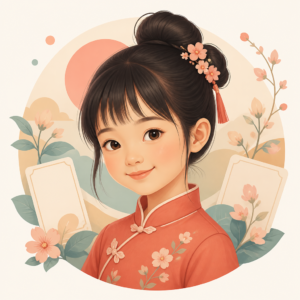
Choosing Chinese girl names is about more than finding a pretty sound. A name’s meaning depends on the Chinese characters selected, while its style may reflect family traditions, literary influence, nature, virtue, or modern naming tastes. This collection includes graceful traditional choices, contemporary two-character names, and familiar Chinese female names with pinyin and meaning notes. You will also find practical guidance on tones, character selection, surname order, and how to choose a name that feels natural in the language and culture.
Quick Picks: Beautiful Chinese Girl Names
| Name | Gender | Meaning | Origin/Usage |
|---|---|---|---|
| Mei (美) | Girl | Beautiful | Chinese given name |
| Meihua (梅花) | Girl | Plum blossom | Traditional nature name |
| Hui (慧) | Girl | Wisdom | Virtue-inspired Chinese name |
| Jing (静) | Girl | Quiet, calm | Traditional and modern usage |
| Lian (莲) | Girl | Lotus | Nature and literary usage |
| Lan (兰) | Girl | Orchid | Classic floral name |
| Qian (倩) | Girl | Graceful, lovely | Chinese given name |
| Qing (晴) | Girl | Clear, sunny | Modern nature-inspired choice |
| Shan (珊) | Girl | Coral | Feminine given name |
| Shu (舒) | Girl | Comfortable, at ease | Virtue-style name |
| Ting (婷) | Girl | Graceful, elegant | Common feminine usage |
| Xin (欣) | Girl | Joyful | Modern given name |
| Yue (悦) | Girl | Happiness, delight | Contemporary Chinese name |
| Zhilan (芷兰) | Girl | Fragrant iris and orchid | Classical literary style |
| Mengyao (梦瑶) | Girl | Dream and precious jade | Modern two-character name |
| Yutong (雨桐) | Girl | Rain and parasol tree | Modern nature-inspired name |
For a broader collection covering more naming styles and character combinations, see our guide to Chinese names and their meanings.
Traditional and Classic Chinese Girl Names
Many classic Chinese names draw on flowers, seasons, precious materials, and admired qualities. The meanings below refer to the characters shown. A different character with the same pinyin may create a completely different meaning.
Ai (爱)
Written with the character for “love,” Ai is a warm, simple choice. It can appear as a given name or as part of a longer name.
An (安)
An means “peace” or “safety.” It is concise, gentle, and widely understandable, although it is not exclusively feminine and may be used in different naming contexts.
Fang (芳)
Fang means “fragrance” or “fragrant.” The character has a classic feminine association and suits families looking for a floral but understated meaning.
Fen (芬)
Fen refers to fragrance or a pleasant scent. It is a traditional-style choice with a soft sound and a meaning connected to flowers and freshness.
Hua (花)
Hua means “flower.” It is direct, memorable, and nature-centered, though families may choose a more elaborate two-character name containing Hua.
Hui (慧)
Hui means “wisdom” or “intelligence.” It is a strong virtue name for parents who want the name to express thoughtfulness and clear judgment.
Jia (佳)
Jia can mean “good,” “fine,” or “beautiful.” It is often used in contemporary compound names and has a bright, positive feel.
Jing (静)
Jing means “quiet,” “still,” or “calm.” This choice suggests composure and serenity rather than a bold or dramatic style.
Juan (娟)
Juan means graceful or beautiful in the character 娟. It is especially associated with feminine elegance in traditional naming.
Lan (兰)
Lan means “orchid,” a flower often associated with refinement. It is one of the most recognizable classic floral choices for a girl.
Li (丽)
Li means “beautiful” or “lovely” when written 丽. Because Li has several possible Chinese characters, the chosen character should always be confirmed.
Lian (莲)
Lian means “lotus.” The lotus is a familiar image in Chinese literature and art, making this a graceful choice with a calm, natural quality.
Ling (玲)
Ling, written 玲, suggests the clear, delicate sound of jade or other precious objects. It is often perceived as bright and feminine.
Mei (美)
Mei means “beautiful” when written 美. It is also associated with the plum character 梅 in other names, so the written form matters greatly.
Meihua (梅花)
Meihua means “plum blossom.” The plum blossom is a classic nature image and gives this name a distinctly traditional, poetic character.
Min (敏)
Min means “quick,” “clever,” or “敏捷” in the sense of mental sharpness when used in related expressions. It suggests alertness and intelligence.
Ning (宁)
Ning means “peaceful” or “calm.” It works well as a short given name and can also form part of a two-character name.
Ping (平)
Ping means “peace,” “level,” or “even.” It has a balanced, steady quality and is sometimes chosen for its wish of a peaceful life.
Qian (倩)
Qian, written 倩, conveys a graceful or lovely appearance. It is a familiar feminine choice with a polished, elegant sound.
Qiao (巧)
Qiao means “clever,” “skillful,” or “巧妙” in related usage. It can express creativity, dexterity, and an able nature.
Rong (蓉)
Rong, written 蓉, is associated with hibiscus and appears in feminine names. Other characters pronounced Rong have different meanings, so the written form is important.
Shan (珊)
Shan means coral when written 珊. It has a jewel-like, ocean-inspired quality and is commonly recognized as a feminine given-name element.
Shanshan (珊珊)
Shanshan repeats the character for coral, creating a rhythmic and affectionate sound. Repeated-character names can feel especially graceful and memorable.
Shu (舒)
Shu means “comfortable,” “at ease,” or “to relax.” It makes a gentle virtue name associated with an untroubled and open spirit.
Ting (婷)
Ting, written 婷, means graceful or elegant. It is strongly associated with feminine naming and is often used in modern two-character combinations.
Wen (文)
Wen means “culture,” “writing,” or “refinement” in several contexts. It is not exclusively feminine, but it can give a girl’s name an educated and literary quality.
Xia (霞)
Xia means “rosy clouds” or “glow of the sunset” when written 霞. It creates a colorful, atmospheric nature image.
Xiu (秀)
Xiu means “elegant,” “excellent,” or “秀丽” in related usage. It is a traditional-style choice connected with beauty and distinction.
Yan (妍)
Yan means “beautiful” or “pretty” when written 妍. Since Yan can be written with many other characters, the intended spelling should be recorded clearly.
Ying (莹)
Ying, written 莹, suggests brightness, luster, or the gleam of a precious stone. It is a delicate choice with a luminous feeling.
Yu (玉)
Yu means “jade” when written 玉. Jade imagery is familiar in Chinese naming and gives the name a precious, polished quality.
Yue (月)
Yue means “moon” when written 月. It is short and poetic, although Yue can also be written 悦, meaning happiness or delight.
Zhen (珍)
Zhen means “precious” or “treasured.” It makes the family’s affection part of the name’s central meaning.
Modern and Unique Chinese Girl Names
Modern Chinese names often combine two characters to create a specific image or wish. These choices are not all exclusively female, and their popularity can vary by region, generation, and family preference. They are useful ideas for parents seeking unique Chinese girl names without inventing meanings that the characters do not support.
Jingyi (静怡)
Jingyi combines “quiet” or “calm” with “harmony” or “joy.” Together, the characters suggest a peaceful and contented personality.
Kexin (可欣)
Kexin uses characters that can suggest “可爱” or pleasing and “joyful.” It has a light, friendly sound in contemporary usage.
Mengyao (梦瑶)
Mengyao combines “dream” with 瑶, a character associated with precious jade. The result feels imaginative and jewel-like.
Qing (晴)
Qing means “clear” or “sunny” when written 晴. It is a bright nature choice, distinct from Qing written 清, which can mean clear, pure, or quiet.
Sihan (思涵)
Sihan combines “thought” or “reflection” with 涵, which can suggest inner depth or generous capacity. It has a thoughtful, modern style.
Shihan (诗涵)
Shihan uses 诗, “poetry,” with 涵, creating a literary and gentle impression. The spelling is similar to Sihan, but the first character changes the meaning.
Xin (欣)
Xin means “joyful” or “happy” when written 欣. It is a cheerful short name and a popular building block for longer combinations.
Xinyue (欣悦)
Xinyue combines two characters connected with happiness and delight. It gives a name an openly optimistic meaning.
Yihan (怡涵)
Yihan combines “harmony” or “joy” with 涵, a character associated with depth and generosity. It feels calm and contemporary.
Yinuo ( 一诺 )
Yinuo is commonly written 一诺, combining “one” with “promise.” It can suggest keeping one’s word, although spacing and character presentation should be checked carefully.
Yuhan (雨涵)
Yuhan combines “rain” with 涵, often interpreted through ideas of depth or gentleness. It is a modern nature-inspired choice.
Yutong (雨桐)
Yutong means “rain” and “parasol tree” with these characters. The combination creates a soft, botanical image without relying on a single floral character.
Zhilan (芷兰)
Zhilan combines 芷, a fragrant herb or iris-like plant, with 兰, “orchid.” It has a classical, literary style and a distinctly botanical meaning.
Zixuan (梓萱)
Zixuan combines the catalpa tree character 梓 with 萱, a plant traditionally associated with forgetfulness of worry. The complete meaning comes from both characters, not from the sound alone.
How Chinese Names Work: Characters, Sounds, and Usage
Chinese names are usually written with the family name first, followed by the given name. A given name may contain one or two characters, while romanization in the Latin alphabet can hide important differences. For example, Mei may represent 美, “beautiful,” or 梅, “plum,” and Yue may represent 月, “moon,” or 悦, “joy.” Always select and save the exact characters before finalizing a name.
Mandarin pinyin uses tones, so the pronunciation is more precise than an English spelling suggests. In everyday English conversation, speakers may not reproduce the tone perfectly, but learning the Mandarin pronunciation is still respectful and useful. Pinyin syllables can also be read differently from familiar English words: “Q” is pronounced roughly like a soft “ch,” “X” is similar to a light “sh,” and “Zh” is a curled-tongue sound that does not have a perfect English equivalent.
Language, nationality, and usage should also be kept distinct. A Chinese name may be used by people from mainland China, Taiwan, Hong Kong, Singapore, other Chinese-speaking communities, or families in the diaspora. Character preferences, romanization systems, pronunciation, and naming fashion can differ across these settings. If you are choosing a name for a specific family or region, ask a fluent speaker to check both the characters and the intended pronunciation.
How to Choose the Right Chinese Girl Name
- Start with the characters: Choose the written meaning first, then check whether the sound works with the family surname.
- Say the full name aloud: Practice the surname and given name together in Mandarin and in the language used at home.
- Consider tone flow: Adjacent tones can affect how smooth a name sounds, so a native speaker’s opinion is valuable.
- Check regional usage: Ask whether the name feels traditional, modern, literary, uncommon, or gender-neutral in the relevant community.
- Plan the romanization: Decide whether the family will use Mandarin pinyin or another established spelling system, and keep the spelling consistent.
- Look beyond a direct translation: A name can carry an image or wish through its characters, not merely one dictionary word.
If you are comparing East Asian naming traditions, our Japanese names guide explains why character-based names also need careful attention to written form and pronunciation. Families interested in broader international styles may also enjoy these French girl name ideas.
Final Thoughts on Chinese Girl Names
The best Chinese girl name is one whose characters, sound, and family context work together. Classic choices such as Lan, Lian, Mei, and Hui offer clear traditional imagery, while names such as Yutong, Mengyao, and Jingyi create more individualized combinations. Whether you prefer cute Chinese girl names, a literary choice, or a calm virtue name, confirm the exact characters and pronunciation before making your final decision. That small step protects the meaning and helps the name feel natural wherever it is used.
Frequently Asked Questions
What are some beautiful Chinese girl names?
Mei, Lan, Lian, Hui, Jing, Qian, Ting, Yue, Zhilan, Mengyao, and Yutong are beautiful choices with meanings connected to beauty, flowers, calmness, joy, poetry, or nature.
Do Chinese girl names have one fixed meaning?
Not always. A romanized syllable can represent several Chinese characters, and each character may have a different meaning. Always confirm the exact written form.
How are Chinese names usually ordered?
In many Chinese naming contexts, the family name comes first and the given name follows. Regional, family, and overseas usage can vary, so follow the convention most appropriate for your family.
Are Chinese female names always exclusively feminine?
No. Some names and characters are strongly associated with girls, while others are gender-neutral or can be used differently across regions and generations.
How can I check the pronunciation of a Chinese name?
Ask a fluent Mandarin speaker to pronounce the complete name, including its tones. This is especially helpful because pinyin letters do not always sound like their English equivalents.

1 thought on “Chinese Girl Names: 120 Beautiful Names With Meanings”